



With rapid urbanization and growing industrial activity, controlling noise pollution has become a critical requirement for buildings and infrastructure projects. Many facilities need continuous airflow for cooling and ventilation, but open ventilation paths often allow unwanted noise to escape. Acoustic louvers are specifically designed to solve this challenge by allowing air movement while effectively reducing noise transmission.
Understanding Acoustic Louvers
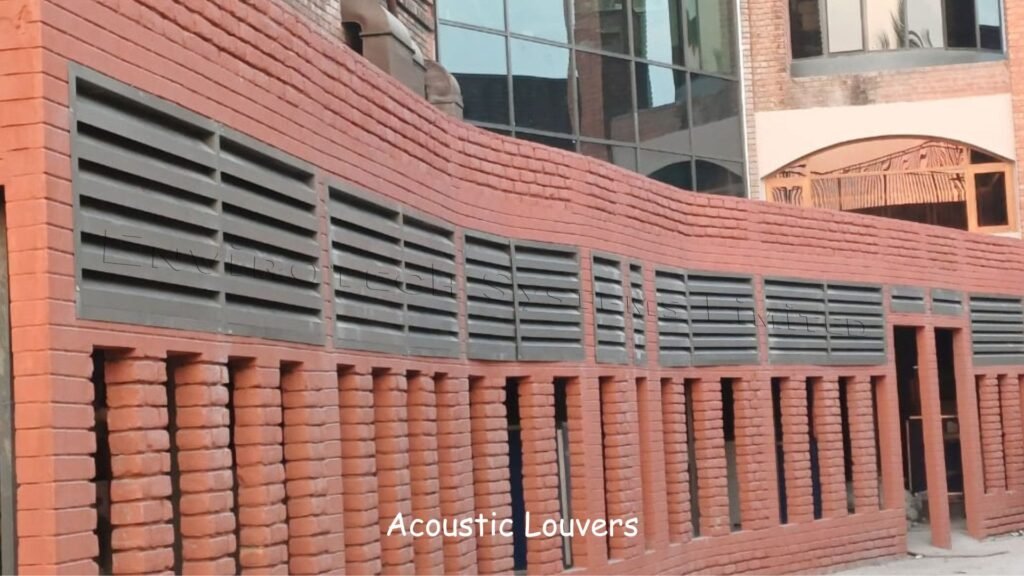
Acoustic Louvers are sound-attenuating ventilation systems used in areas where both noise control and airflow are essential. Unlike conventional louvers, they are engineered with internal sound-absorbing materials that significantly reduce noise passing through ventilation openings. These louvers are commonly installed in walls, facades, enclosures, and mechanical rooms exposed to high sound levels.
How Acoustic Louvers Reduce Noise
Acoustic louvers function by combining aerodynamic airflow design with sound absorption technology. As air passes through the angled louver blades, sound waves are trapped and absorbed by the acoustic infill material inside the blades or baffles. This process reduces the sound energy before it exits the system, while airflow remains largely unrestricted.
The effectiveness of an acoustic louver depends on blade depth, spacing, infill material density, and overall design.
Common Applications of Acoustic Louvers
Acoustic louvers are widely used in both industrial and commercial environments, including:
- Diesel generator rooms and acoustic enclosures
- HVAC intake and exhaust openings
- Manufacturing plants and compressor rooms
- Data centers and electrical substations
- Commercial buildings, malls, and offices
- Infrastructure projects such as metro stations and railways
They are especially valuable in noise-sensitive zones where regulatory compliance is mandatory.
Difference Between Acoustic Louvers and Standard Louvers
Standard ventilation louvers are designed mainly for airflow and weather protection. In contrast, acoustic louvers are engineered to provide measurable sound attenuation, often reducing noise levels by 10 dB to 35 dB or more. This makes them suitable for high-noise applications where ordinary louvers are insufficient.
Acoustic Louvers play a crucial role in modern noise control systems by delivering the perfect balance between ventilation and sound reduction. Their advanced design, strong construction, and proven performance make them ideal for industrial, commercial, and infrastructure projects. When effective noise management is required without compromising airflow, acoustic louvers are the smart and practical solution.


